03Impact
Claims we can show you
the coordinates for.
Carbon marketing is full of round numbers nobody can trace. This page separates what is a property of biochar, what the company has observed in its own fields, and what is still being measured.
What is true of biochar
It stays put
Pyrolysis rearranges plant carbon into aromatic structures that soil microbes cannot readily break down. Carbon added as biochar persists on a scale of centuries to a millennium, rather than the single season that compost or crop residue gives you.
It holds water
The pore network takes up water during rain and releases it back to roots through dry spells. In rain-fed systems that buffer is often the difference between a crop that finishes and one that does not.
It buffers acidity
Biochar is typically alkaline and raises pH in acidic soils, which is the specific condition limiting yield across large areas of the region we work in.
What we are working toward
The impact
proposition.
- 01Restore degraded soils and enhance agricultural productivity
- 02Improve soil water retention and resilience to drought
- 03Reduce residue burning, smoke pollution and greenhouse-gas emissions
- 04Secure durable atmospheric carbon removal and storage
- 05Create green employment and additional income for rural communities
- 06Support climate-smart agriculture, circular economy and food security
- 07Advance Africa's contribution to the Paris Agreement and the Sustainable Development Goals
What we have observed
Up to
25% more yield.
This is the company's own field experience, most pronounced in degraded and acidic soils where conventional inputs return the least. It is stated as an observation from our own plots, not as a controlled trial result, and we would rather say so than round it up and call it science.
Independent trial data is the next thing this page should carry. Until it does, the honest evidence is where the work happened.
Where the work was done
Three sites,
one morning.
Niger State, 3 August 2026. The coordinate stamps are the field team's, burned in by the camera at the moment of capture.
- 01
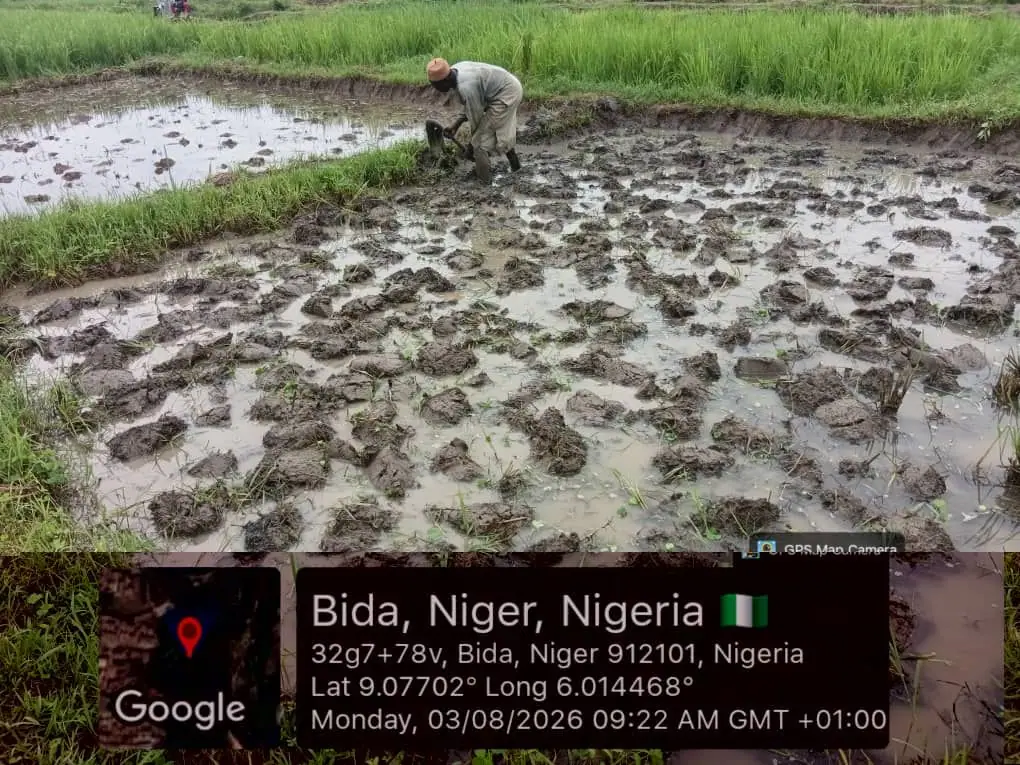
- 02
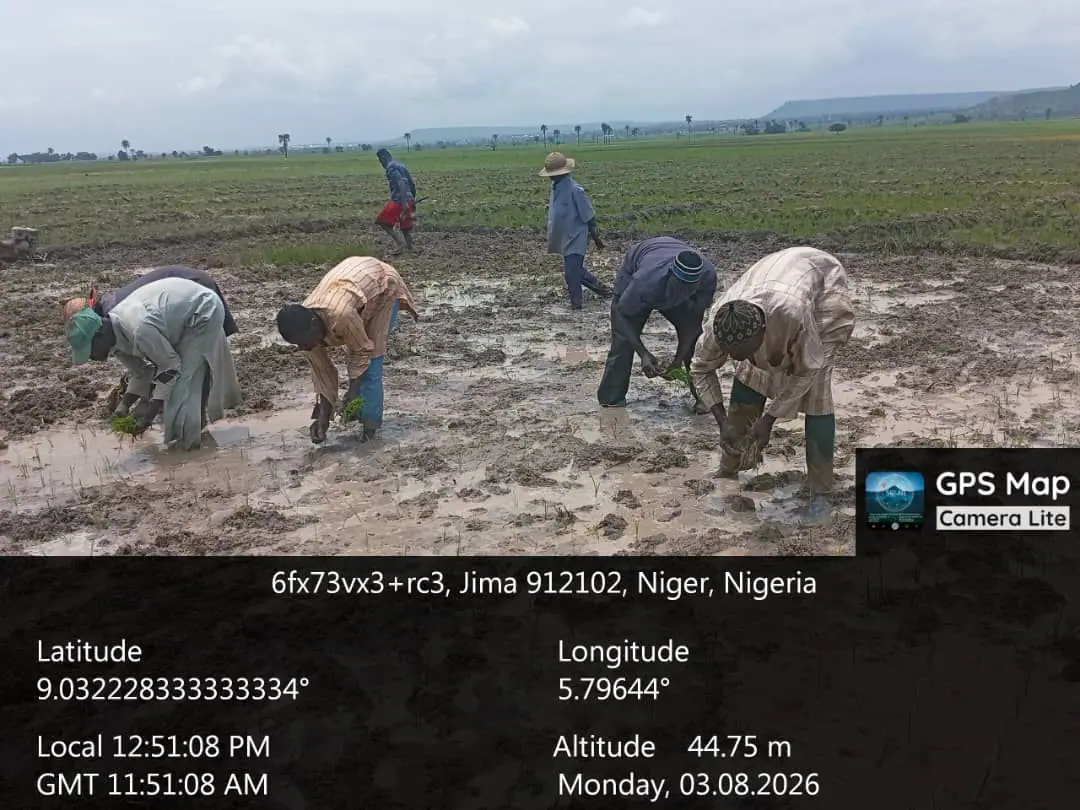
- 03
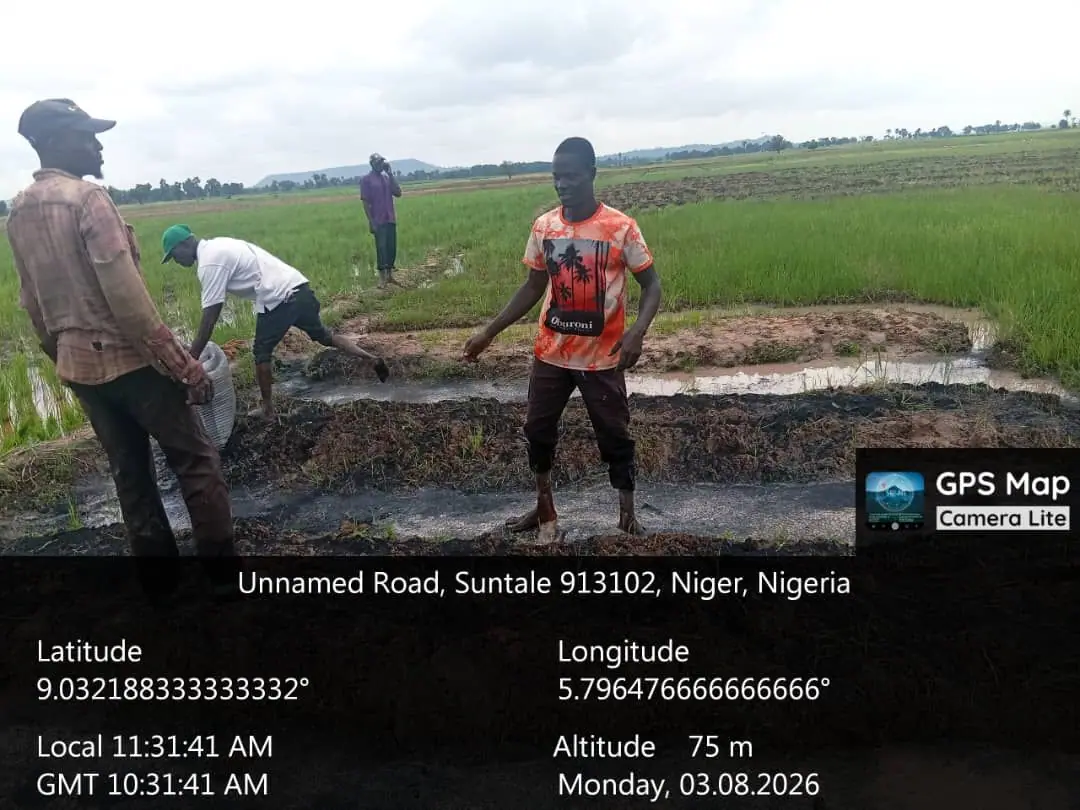


2024Report
Biochar Africa Report
The company's full 2024 report: the production model, the feedstock economics, the field programme in Niger State and the carbon case, set out at length.